
A Year of Progress — and the People Who Made It Possible
As 2025 comes to a close, Philadelphia’s progress in reducing gun violence is both real and measurable. After recording one of the lowest homicide totals in decades in 2024, the city sustained that momentum this year, with violence remaining well below pandemic-era highs and pre-pandemic levels. The result is Philadelphia’s lowest per-capita homicide rate in more than a decade – progress driven not by chance, but by deliberate, coordinated action.
This progress is not abstract. It represents lives saved, families spared, and communities beginning to experience greater stability and hope. Residents are starting to feel that change, with more people reporting they feel safe in their neighborhoods and fewer saying gun violence dominates daily life.
Philadelphia’s progress has been made possible by strong leadership and partnership across city government. Mayor Cherelle L. Parker’s clear commitment to community safety, Police Commissioner Kevin Bethel’s disciplined, data-driven approach, and Chief Public Safety Director Adam Geer’s emphasis on coordination and evidence-based strategy have helped ensure that intervention remains central to the city’s public safety framework.
The Civic Coalition to Save Lives’ role is to unite leaders around what research and experience consistently show works: focused, evidence-based gun violence intervention aimed at those at the highest risk of shooting someone or being shot. Data is clear – less than one percent of Philadelphians are at the highest risk, and reaching them directly is the fastest path to fewer shootings and the greatest near-term impact. That is why this work is both urgent and solvable.
Importantly, the Coalition does not provide direct services; rather, it focuses on ensuring that proven intervention strategies remain a sustained priority. We do this by educating coalition members on what works, supporting coordination across systems, and staying grounded in rigorous research through academic partners and national experts.
Throughout 2025, we reinforced this focus through public engagement, media conversations, our second annual convening of civic, business, community, and government leaders, and this monthly newsletter. We intentionally and consistently spotlighted the community-based organizations and frontline practitioners doing life-saving work every day. These partners interrupt cycles of retaliation, support victims and families, and remain present in neighborhoods where violence is most concentrated. Their work is demanding, often unseen, and essential to sustaining progress.
At the same time, we remain clear-eyed. While violence has declined citywide, it remains concentrated in a small number of neighborhoods, and men of color—particularly Black men—continue to face an outsized risk. Citywide progress does not automatically translate into equity, and sustaining these gains will require continued focus and follow-through.
The declines we’ve seen are hard-won and not guaranteed to last. Success depends on staying disciplined about what works: using data to guide decisions, strengthening coordination, and continuing to invest in intervention efforts closest to the problem.
Looking ahead to 2026, the path forward is clear. Together, we will build on what’s working, focus resources on the people and places at highest risk, and keep community-based intervention at the center of Philadelphia’s safety strategy. This year showed what can happen— made possible by partners who show up every day to save lives – and what we must continue to sustain together.
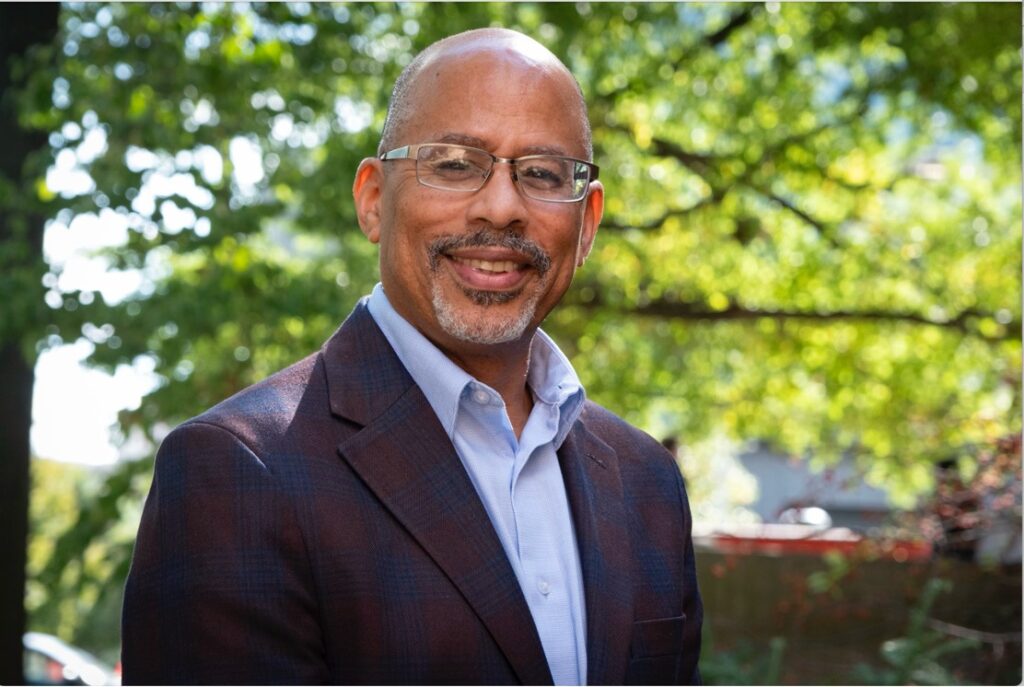
David Brown, Executive Director, Civic Coalition to Save Lives
Keys in Hand, Futures Unlocked: How the Civic Coalition Collaborated with the Philadelphia Housing Authority to Open Doors to Stable Housing
Stable housing is often the key to unlocking new beginnings and opportunities. This is especially true for those stepping away from violence. As a connector and catalyst, the Civic Coalition to Save Lives collaborated with the Philadelphia Housing Authority (PHA), the City of Philadelphia’s Office of Public Safety, and frontline intervention partners to design an innovative housing stability pilot for people at the highest risk of gun violence.
Frontline intervention partners across the community violence intervention ecosystem consistently emphasized that housing instability was stalling progress for many intervention participants. The Coalition elevated this concern and helped frame a solution: a targeted housing pathway for people already engaged in intensive intervention services.
As one of the Coalition’s critical implementation partners, the Gun Violence Intervention Coordination Center (GVICC) lent subject matter expertise in both housing and CVI to co-design the program and referral process with program partners. This ensured that processes aligned with both fields’ best practices and implementation standards. The result is a program that meets the evolving needs of program participants across service providers.
Reflecting the Coalition’s mission uniting leaders to support evidence-based intervention efforts in Philadelphia, the pilot began through a longstanding connection between PHA CEO Kelvin A. Jeremiah and the Coalition’s founding Executive Director Estelle Richman. In September 2023, the two began to discuss possible solutions to address the housing problem for high-risk individuals actively engaged in intervention. Jeremiah convened PHA staff to shape the concept into a workable agreement and budget, while the Coalition provided resources and support to launch in October 2024 with the first intervention referral.
Launching the pilot first required PHA board approval, new procedures for people with criminal histories, and community meetings to address questions about fairness and safety. Once the community understood the program’s objectives, design and its link to community safety, they supported the efforts.

Today, all 30 slots are filled. Participants, referred by trusted nonprofit partners, move quickly with help from a dedicated PHA coordinator. Pushing Progress Philly (P3) provides intensive case management, while PHA offers quarterly check-ins and resource connections. The Coalition does not provide housing or case management; instead, it helped ensure that existing partners operated as a single, coordinated intervention working toward one goal.
The impact is concrete. For one participant, stable housing enabled him to re-enter family court and reunite with his child. Another, Kalvin Davis, now plans to pursue homeownership through PHA and start a non-profit to support youth. As Makeeda Holley, PHA executive vice president of Resident Programs and Partnerships puts it, “Housing creates the conditions where progress can stick.”
The pilot has also been a testing ground for problem-solving. When partners were looking for the best way to provide flexible monthly stipends to participants without increasing rents under federal Housing and Urban Development rules, they took advantage of new federal guidance and PHA’s designation as a Moving to Work housing authority to restructure support as a $500 per month “guaranteed income” program.
With all slots filled, the pilot is at a critical juncture, underscoring that this success is only the start: with stable housing, continued research must track whether participants are able to remain gun violence free. One more year of funding remains; without new investment, new referrals will pause. For the Civic Coalition to Save Lives, this moment underscores its purpose: to keep effective, evidence-informed intervention for high-risk individuals at the center of Philadelphia’s safety strategy, and to connect the people, agencies, and ideas that put keys in people’s hands and open doors to safer futures.
Profiles in Progress: A storytelling series from the Civic Coalition to Save Lives
Just as the Liberty Bell’s crack tells a story of resilience and resonance, Profiles in Progress highlights the people behind Philadelphia’s progress in reducing gun violence. Participants were invited to complete a brief questionnaire about their personal experience with intervention. Their stories, in their own words, demonstrate the power of evidence-based intervention strategies and the importance of investing in and sustaining this work.
Rasheid Robinson

When Rasheid Robinson returned home from prison, he was determined to rebuild—but unsure where to start. Grieving the loss of his mother and facing barriers tied to his record, he struggled to find work and stability. His introduction to Pushing Progress Philly (P3), along with support from Black Men Heal and the Philadelphia Housing Authority’s intervention-focused housing pilot, became a turning point. Today, Rasheid works as a P3 Job Coach, supporting others who are navigating reentry and risk with the benefit of hard-earned experience.
Please tell us a little about yourself and your life before connecting with an intervention program.
Rasheid: Returning from prison I was lost. I never had a bank account, I never had a job. I had to figure things out. I lost a lot being in prison – I lost time, I lost my mom. I didn’t have anything or know where or how to start, so I had to research on just how to get along in life. I was getting discouraged because I was being judged by a piece of paper that stated my crime. I did a crime, yes but I also did the time for it.
It was a struggle to find my footing but I didn’t give up, I kept going even when it was easy to slip back. I remember getting offered a job on a Friday, but by Monday they rescinded the offer because of my background check.
I never had any guidance before, but with the support system I have now, I was able to thrive. Somebody took a chance on me and I am proud to be doing the right thing.
What were some of the challenges you were facing before becoming involved in an intervention program?
Rasheid: Not getting jobs I was applying for because of my criminal background. I also used to have issues with my parole officer until I showed her that I was really out there trying to do the right thing.
The Intervention Moment
How did you first hear about or get connected to the intervention program or organization?
Rasheid: I found out about P3 from my religious organization. After Friday service one day a brother at the Masjid made an announcement talking about a new program that would be starting up for men that were affected in some way by gun violence. I was in the first P3 cohort.
What happened in that first conversation or meeting that made you decide to participate?
Rasheid: During orientation, the conversations and stories that were being told by the other participants started breaking down the walls inside of me. I still have a strong bond with that group of guys I started with.
Was there a person or moment that stood out as a turning point for you?
Rasheid: Yes. P3’s former job coach Edward Hamilton; outreach worker Jaleel Meekins and Program manager Kareem Brown, just to name a few. These men saw me as I was, at that moment, not who I was in my past. They saw things in me that I didn’t see in myself. They later came to me about becoming an intern for the program. At first I was hesitant but I went forward with it, and then they actually offered me a permanent position.
The Impact
How has your life changed since intervention?
Rasheid: I started getting more opportunities. I recall a time I was asked to speak on behalf of P3 down at City Hall and just thinking, ‘Dang! I remember being in rooms like this when I was part of the problem. Now, I’m part of the solution.
What has been the most meaningful change for you personally?
Rasheid: Being accessible to the participants. Although I don’t work on weekends, I let them know they can reach out to me if they need me. Their problems don’t stop because it’s the weekend. I didn’t have that option, so I do my best to show them I’m more than just a staff member.
How have these changes impacted your relationships with family, friends, or community?
Rasheid: My friends are different now, my circle has changed. I spend my time with people who are more aligned with who I am now. My family life is better, because I appreciate them more and they are proud of me. I grew up in prison, I had to come home and learn how to be a man.
The Ripple Effect
What’s one thing you’re doing now that you never before thought possible?
Rasheid: My job! I’m sitting in rooms working with people that don’t have the same background (criminal) I do and I’m accepted.
Have you been able to help someone else because of the support you received?
Rasheid: Yes, part of my job as a job coach is building relationships with employers and bridging the gap between them and the participants.
Looking Forward
What are your hopes or goals for the future?
Rasheid: Homeownership and entrepreneurship. I would like to go through the Philadelphia Housing Authority home ownership program to purchase a house for my family.
I would like to start a fitness business so I can incorporate my love for helping people with health and wellness.
What would you say to someone who is in the position you were in before intervention?
Rasheid: Be patient, be willing to learn, be willing to humble yourself. Most importantly, don’t be afraid to talk to people and ask questions.
Why do you think it’s important for programs like this to keep going, even when violence is down?
Rasheid: It’s important because it’s proof that they (intervention strategies) work. It shows that when individuals are fostered and supported, their mindsets can, and will, change. If intervention stops, then people will go back to whatever they were doing before.
Responses were lightly edited only for clarification purposes.
PRSA Philadelphia Recognizes Civic Coalition to Save Lives Monthly Newsletter with Pepperpot Award

The Civic Coalition to Save Lives’ monthly newsletter was recognized with a PRSA Philadelphia Pepperpot Award, honoring its strength as a consistent and impactful source of information. Launched in December 2022, the newsletter keeps more than 1,000 cross-sector stakeholders informed and engaged, reinforcing the Civic Coalition’s commitment to sharing knowledge, elevating partners, and highlighting evidence-based violence intervention efforts across Philadelphia. This recognition is possible because of our readers whose engagement, feedback, and partnership help bring this work to life. Thank you!
ICYMI
News Roundup: Spotlight on Intervention
Each month, we feature news stories from Philadelphia and beyond that highlight the power of intervention—showcasing programs, research, and community efforts working to prevent violence, support those at highest risk, and build safer neighborhoods through proven, people-centered strategies.

Philly’s Top Cop Talks Plummeting Homicides, Horrible Drivers, and ICE Raids By Victor Fiorillo | December 4, 2025
Philadelphia Police Commissioner Kevin Bethel is reshaping the department’s approach to public safety by emphasizing accountability, neighborhood presence, and coordination with broader violence-prevention efforts. Since taking the role, Bethel has focused on restoring internal discipline, improving response times, and aligning policing with citywide strategies that address the root causes of crime. City leaders and public safety officials frame the shift as part of a longer-term effort to stabilize communities while rebuilding public trust in law enforcement.

An Affordable Housing Plan Could Drive Down Shootings in Philly By Mensah Dean | December 11, 2025
Philadelphia officials are advancing a housing-focused strategy aimed at reducing gun violence by stabilizing neighborhoods and addressing long-standing inequities. The plan emphasizes preserving affordable housing, improving vacant and distressed properties, and coordinating housing investments with public safety and community-based efforts. City leaders and advocates argue that safe, stable housing is a critical foundation for violence reduction, reinforcing research that links neighborhood conditions and economic security to long-term public safety outcomes.

Philadelphia Police Commissioner Kevin Bethel Talks Upbringing, Role, Homicide Reductions, and More By Jensen Toussaint | December 12, 2025
Philadelphia Police Commissioner Kevin Bethel is leading a shift in the department focused on clarity of mission, internal accountability, and stronger alignment with citywide public safety goals. His approach emphasizes consistent leadership, clearer expectations for officers, and coordination with violence-prevention and community partners alongside traditional policing. Supporters say the strategy reflects a broader effort to stabilize neighborhoods, improve department culture, and reinforce public trust as Philadelphia continues to address gun violence and crime.

Philadelphia’s Homicides at Historic Lows By Meaghan McDonald, Jasmine Olivier-McGregor, Ph.D., and Maridarlyn Gonzalez | December 15, 2025
In cities across the country, homicide rates have dropped below pre-pandemic levels. In Philadelphia, homicides have not only fallen below pre-pandemic levels, 2024 had the fourth-lowest total number of homicides in the past 55 years. And 2025 is trending even better. The Pew Charitable Trusts analyzed publicly available data to provide a clearer understanding of the criminal homicide trends in Philadelphia and how they compare with other cities across the nation.
The Year in Gun Violence Solutions By Chip Brownlee and Fairriona Magee | December 18, 2025
A detailed examination of how governments respond after mass violence highlights the impact of swift, coordinated action focused on prevention rather than reaction alone. The analysis underscores the role of strong regulatory frameworks, expanded mental health supports, and clear accountability in shaping long-term public safety outcomes.

State touts 35% drop in homicides, invests nearly $3M to expand hospital-based violence programs December 22, 2025
Pennsylvania officials announced new state funding to expand hospital-based violence intervention programs, which aim to support recovery for patients injured by gun violence. The programs connect victims with trauma-informed care, case management, and community resources at a critical moment, with the goal of reducing repeat injuries and future harm.